Thursday, February 28, 2008

NAZI is PUNK

A Nazi punk is a neo-Nazi who is part of the punk subculture. The term can also describe the kind of music they play.


Nazi punk music is similar to most other forms of punk rock, although it usually differs by having lyrics that express hatred for minority groups such as Jews, blacks, multiracial people, and homosexuals. Nazi punk bands have played several styles of punk music, including Oi!, streetpunk and hardcore punk. Nazi skinheads who play music similar to hardcore, Oi! or heavy metal are considered part of a separate genre called Rock Against Communism.

Nazi punks often wear clothing and hairstyles typically associated with the majority of the punk subculture, such as: liberty spike or Mohawk hairstyles, leather rocker jackets, boots, chains, and metal studs or spikes.

Nazi punks should not be confused with early punks, such as Sid Vicious and Siouxsie Sioux, who incorporated Nazi imagery such as Swastikas into their image purely for shock value. Many punk bands, such as Sex Pistols and Dead Kennedys, have stated that there is no place for Nazi punks in the real punk subculture. The Dead Kennedys expressed this view in their song "Nazi Punks Fuck Off!".

The history of this faction within the punk subculture dates back as early as 1978, with an organization in England called the Punk Front. This group was a youth division of the white nationalist National Front. Although the Punk Front only lasted one year, it was successful in recruiting several English punks, as well as forming a number of white power punk bands. The white power skinhead subculture (often referred to by non-racist skinheads as boneheads) took over as the leaders of the white power music movement following the demise of the Punk Front in 1979. However, the Nazi punk subculture sparked up worldwide soon after, and appeared in the United States by the early 1980s, during the rise of the hardcore punk scene.

The neo-Nazi band Skrewdriver started off as an apolitical punk rock band, although some accounts show that vocalist Ian Stuart Donaldson held racist views at the time. In the early 1980s, the white power skinhead band Brutal Attack temporarily transformed into a Nazi punk band. They said they did that in the hopes of getting public concerts booked easier, but this tactic didn't work, and they soon returned to being a racist skinhead band. The punk band The Exploited has been accused several times of being Nazi punks, due to racist remarks and behavior of the singer Wattie Buchan, and because of alleged personal connections to members of the far right. However, none of the band's song lyrics support Nazism or fascism.

Read More

SkinHead

Skinheads, named for their close-cropped or shaven heads, are a working-class subculture that originated in the United Kingdom in the late 1960s, and then spread to other parts of the world. The first skinheads were greatly influenced by West Indian rude boys and British mods, in terms of fashion, music and lifestyle. Originally, the skinhead subculture was primarily based on those elements, not politics or race. Since then, however, attitudes toward race and politics have become factors in where skinheads align themselves. The political spectrum within the skinhead scene ranges from the far right to the far left, although many skinheads remain apolitical. Fashion-wise, skinheads range from a clean-cut 1960s mod-influenced style to less-strict punk- and hardcore-influenced styles.

In the late 1950s, the United Kingdom's entrenched class system limited most working class people's educational, housing, and economic opportunities. However, Britain's post-war economic boom led to an increase in disposable income among many young people. Some of those youths spent that income on new fashions popularised by American soul groups, British R&B bands, certain movie actors, and Carnaby Street clothing merchants.

These youths became known as the mods, a youth subculture noted for its consumerism—and devotion to fashion, music, and scooters. Mods of lesser means made do with practical styles that suited their lifestyle and employment circumstances: steel-toe boots, straight-leg jeans or Sta-Prest trousers, button-up shirts, and braces (called suspenders in the USA). When possible, these working-class mods spent their money on suits and other sharp outfits to wear at dancehalls, where they enjoyed soul, ska, bluebeat and rocksteady music.

Around 1965, a schism developed between the peacock mods (also known as smooth mods), who were less violent and always wore the latest expensive clothes, and the hard mods (also known as gang mods), who were identified by their shorter hair and more working-class image. Also known as lemonheads and peanuts, these hard mods became commonly known as skinheads by about 1968. Their shorter hair may have come about for practical reasons, since long hair can be a liability in industrial jobs and a disadvantage in streetfights. Skinheads may also have cut their hair short in defiance of the more bourgeois hippie culture popular at the time.

In addition to retaining many mod influences, early skinheads were very interested in Jamaican rude boy styles and culture, especially the music: ska, rocksteady, and early reggae (before the tempo slowed down and lyrics became focused on topics like black nationalism and Rastafarianism). Skinhead culture became so popular by 1969 that even the rock band Slade temporarily adopted the look, as a marketing strategy. The subculture gained wider notice because of a series of violent and sexually explicit novels by Richard Allen, notably Skinhead and Skinhead Escapes. Due to largescale British migration to Perth, Western Australia, many British youths in Perth joined skinhead/sharpies gangs in Medina, Rockingham, Armadale, Kelmscott, Lynwood, and Thornlie in the 1960s; forming their own Australian style.

By the 1970s, the skinhead subculture started to fade from popular culture, and some of the original skins dropped into new categories, such as the suedeheads (defined by the ability to manipulate one's hair with a comb), smoothies (often with shoulder-length hairstyles), and bootboys (with mod-length hair; associated with gangs and hooliganism).Some fashion trends returned to mod roots, reintroducing brogues, loafers, suits, and the slacks-and-sweater look.

In 1977, the skinhead subculture was revived to a notable extent after the introduction of punk rock. Most of these revival skinheads were a reaction to the commercialism of punk and adopted a sharp, smart look in line with the original look of the 1969 skinheads and included Gary Hodges and Hoxton Tom McCourt (both later of the band the 4-Skins) and Suggs, later of the band Madness. From 1979 onwards, skinheads with even shorter hair and less emphasis on traditional styles grew in numbers and grabbed media attention, mostly as a result of their involvement with football hooliganism. These skinheads wore punk-influenced styles, like higher boots than before (14-20 eyelets) and tighter jeans (sometimes splattered with bleach). However, there was still a group of skinheads who preferred the original mod-inspired styles. Eventually different interpretations of the skinhead subculture expanded beyond The UK and Europe. One major example is that in the United States, certain segments of the hardcore punk scene embraced skinhead style and developed its own version of the subculture.

Racism, anti-racism and politics

In the late 1960s, some skinheads (including black skinheads) had engaged in violence against random Pakistanis and other South Asian immigrants (an act known as Paki bashing in common slang).Although these early skinheads were not part of an organized racist movement, by the early 1970s there were skinheads who aligned themselves with the white nationalist National Front. However, there had also been anti-racist and leftist skinheads from the beginning, especially in areas such as Scotland and northern England. As the 1970s progressed, the racially-motivated skinhead violence in the UK became more partisan, and groups such as the National Front and the British Movement, saw a rise in skinheads among their ranks. Although many skinheads rejected political labels being applied to their subculture, some working class skinheads blamed non-white immigrants for economic and social problems, and agreed with far right organizations' positions against blacks and Asians.

By the late 1970s, some openly neo-Nazi groups were largely composed of skinheads, and by this point, the mass media, and subsequently the general public, had largely come to view skinheads exclusively as a subculture promoting white power.However, during the late 1970s and early 1980s, many skinheads, suedeheads, ex-skinheads and football casuals in the UK rejected the dogma of both the left and right. This anti-extremist attitude was musically typified by Oi! bands such as Cockney Rejects, The 4-Skins and The Business.

Some skinheads countered the neo-Nazi stereotype by forming anti-racist organizations, such as Skinheads Against Racial Prejudice (SHARP) which was founded in New York City in 1987 and spread to several other countries, and Anti-Racist Action (ARA), which started in Minneapolis, Minnesota in 1988. Other less-political skinheads also spoke out against neo-Nazis and in support of traditional skinhead culture. Two examples of this were the Glasgow Spy Kids in Scotland (who coined the phrase Spirit of 69), and the publishers of the Hard As Nails zine in England. In Latin America, although many skinheads do not show racist or anti-racist tendencies, many of them use the skinhead lifestyle as a refuge from poverty. In one case, a gang of skinheads in Colombia attacked and killed Julian Javier Prieto outside a club in northern Bogotá.

Read More

THE DISTILLERS IS PUNK

The Distillers were an energetic punk rock band formed in Los Angeles in 1998. They released their first two albums on Hellcat Records/Epitaph Records before moving to Sire, part of the Warner Music Group. The Distillers were originally formed by Australian-born Brody Armstrong (later Dalle), a woman with a distinctively harsh singing voice. Ex-wife of Rancid's Tim Armstrong, Brody changed her name to "Dalle" after their divorce in 2003. Although there were significant line-up changes it was Brody who played guitar, sang, and wrote or co-wrote nearly every song on the band's three albums. Tony Bradley also played guitar and Ryan Sinn played bass.

Beginning as purveyors of aggressive punk sung at high-speed, The Distillers suffered as their second album Sing Sing Death House was branded a poor imitation of Courtney Love's Hole, although still raging furiously and still a showcase for Armstrong/Dalle.

Members Brody and Tony have formed a new band called Spinnerette.

Andy Granelli played drums and left the band in March of 2005 to pursue his other band, Darker My Love.
  • Rose "Casper" Mazzola played back-up guitar and sometimes sang. She left the band after the making of Sing Sing Death House, and played for the band Gold Cash Gold for a short while after.
  • Kim Chi played bass and left the band after the making of the self-titled record. She played on and toured for the first Original Sinners' album with Exene Cervenka of the L.A. punk band X and has since left that band. She is currently touring with Rockstar


Read More

THE TRANSPLANT HISTORY

Transplants are an American punk rock/rap rock supergroup. They formed in 1999 when Tim Armstrong of the band Rancid played his friend and roadie Rob Aston some beats he had made using Pro Tools and asked Rob if he would consider contributing lyrics. Initially, Tim played all the instruments himself but as the project grew, he invited musician friends such as Matt Freeman (Rancid), Lars Frederiksen (Rancid), and Vic Ruggiero (The Slackers) to add to the sound. Before long, Tim and Rob decided to officially form a band, but to make things complete, they wanted a drummer, so Travis Barker from Blink-182 was asked to join in 2002.

Tim first became inspired to work with loops and samples after being introduced to London's speed/garage scene by Kerrang! magazine writer Mörat in the mid-90s.

The group's music is a combination of hip hop, reggae, drum n bass, dub, and punk, but not necessarily all at once. Although many are used sparingly throughout the album, punk and rap remain as the prominent styles. Lyrically, Rob Aston describes their songs as ranging from topics such as murder ("Quick Death") to the passing of a loved one ("Sad But True") to failed friendships ("We Trusted You").

After the release of their first album, The Transplants briefly disbanded in 2003, due to all members being involved in their own projects, including Rancid and blink-182. Then in 2004, they reunited to record their second album (Haunted Cities) before going on a hiatus again.

After two years of recording, The Transplants released their debut album Transplants on Hellcat Records in October 2002. In the end, the album was recorded and mixed entirely in Tim's basement. Special guest vocalists included Eric Ozenne (The Nerve Agents), Davey Havok (AFI), Son Doobie, Danny Diablo, Lars Frederiksen (Rancid) and Brody Dalle (The Distillers, ex-wife of Tim). Brody sings on the track "Weigh On My Mind", which Tim then described as "their song." The singles "Diamonds and Guns" and "D.J. D.J." quickly became MTV favorites and earned the band critical and commercial success. "Diamonds and Guns" and its unmistakable piano hook played by co-producer Dave Carlock continues to win new fans through TV commercials for Garnier Fructis shampoo and Neutrogena. The song was also featured on the soundtrack for the movie Bulletproof Monk (2003). The band followed up the record's success by touring with the Foo Fighters.[citation needed]

By 2003, the band had temporarily disbanded, while Travis worked on the upcoming Blink-182 album, and Tim worked on Rancid's Indestructible.

Haunted Cities

In 2004, during an extensive Rancid hiatus, Armstrong decided to bring the Transplants back together. The band's second album, titled Haunted Cities, was released in June 2005, just four months after Barker's former band blink-182 announced their hiatus.

The album's first and only single, "Gangsters and Thugs" was a hit and the band began touring on the 2005 Warped Tour. After the Warped Tour, the Transplants started to plan a large North American tour with Pennywise and wanted to release a second single. The band had even shot a video for the upcoming single "What I Can't Describe." However, these plans were cut short due to Armstrong reportedly suffering from exhaustion. Break-up rumors began to swirl. A second single off the album was never (officially) released.

Amidst all the turmoil, the band released the screwed and chopped version of Haunted Cites on November 1, 2005, a very first for a rock album.

Soon after the cancellation of the North American tour, two band members announced several more side projects that they would be embarking on during the Transplants break. Travis revealed that he would be starting a tour with DJ AM and also a new band with Rob and DJ Paul Wall which would become Expensive Taste. Rob Aston revealed that he was working on a solo album.

In an interview with Rob Aston and Paul Wall on January 16, 2006 about their project, Expensive Taste, Rob stated "The Warped Tour had just ended and Transplants had just broken up"
source : wikipedia

Read More

Wednesday, February 27, 2008

NOFX is Punk Band

NOFX is an American punk rock band formed in Los Angeles, California (now based in San Francisco), in 1983.

The original lineup included singer/bassist Fat Mike (Michael Burkett), drummer Erik Sandin, and guitarist Eric Melvin. Since 1991 (and after several line-up changes) El Hefe (Aaron Abeyta) has played lead guitar and trumpet. The band rose to popularity in 1994 with their album Punk in Drublic which was certified gold.

NOFX has released 10 studio full lengths, 15 EPs, and many 7" singles. The group has independently sold over 6 million records worldwide.

NOFX released the full-length album Pump Up the Valuum in 2000. It would be their final album on Epitaph, as the band decided to move on to Fat Mike’s own label Fat Wreck Chords.

2002 saw the band record BYO Split Series, Vol. 3, a split album with Rancid in which Rancid covered NOFX songs and NOFX covered Rancid songs.


In 2003, NOFX released War on Errorism, an album of political songs. It became the start of their anti-George W. Bush campaign, and a rallying point for leftist punks. Fat Mike organized the website punkvoter.com, compiled two chart-topping Rock Against Bush CDs, and kicked off a Rock Against Bush U. S. tour. In February 2005, the band launched the NOFX 7" of the Month Club, a subscription-based service which saw the release of one new EP almost monthly, from February 2005 to March 2006 (a total of 12 releases). The cover art for these EPs were chosen from fan-submitted entries. The first 3000 subscribers to the club received all of their records on colored vinyl. Fat Wreck Chords later released full sets of the EPs.

NOFX performing at "The Wall" in Taipei, Taiwan.

NOFX performing at "The Wall" in Taipei, Taiwan.

On March 14, 2006, the EP Never Trust a Hippy was released. This EP was followed on April 18 by the full-length album Wolves in Wolves’ Clothing. On September 12, 2006, the video game EA Sports NHL07 was released, featuring Wolves in Wolves’ Clothing on its soundtrack, produced by Bill Stevenson and Fat Mike.


In January 2007, the band recorded three nights of shows in San Francisco, California, for an upcoming live album entitled They’ve Actually Gotten Worse Live, set to be released in November 2007. The live album is described on the press release as “their sloppiest, drunkest, funnest, best sounding recording ever … and they even made sure not to play any songs off their 1995 live album I Heard They Suck Live.”

NOFX launched a world tour in September 2007, which included concerts in Israel (Jerusalem, Tel Aviv, and Haifa). During their final concert in Israel (7 September in Haifa), vocalist Fat Mike inadvertently struck guitarist Eric Melvin with his bass guitar during their performance of “Bottles to the Ground,” breaking the guitar’s neck and leaving a bloody gash on Eric Melvin’s forehead. (The band completed their scheduled set amidst the audience’s cheers to Eric Melvin’s good humor and perseverance.)

On 12 November 2007 NOFX played a Sold Out show in Johannesburg, South Africa, marking the first tour to the African Continent in the band’s history.

The band’s sound is diverse, utilizing elements of melodic hardcore, skate punk, ska, and other music genres. Their lyrics generally satirize issues such as politics, society, various subcultures, racism, the music industry, and religion.

They cite their influences as Adrenalin O.D., Rich Kids on LSD, The Sex Pistols, and The Subhumans.

Read More

Punk Magazine

PUNK MAGAZINE

Punk was a fanzine created by cartoonist John Holmstrom, publisher Ged Dunn and "resident punk" Legs McNeil. They published a total of 17 issues between 1976 and 1979. Covers featured such artists as Lou Reed, Patti Smith and Blondie. The magazine staff went through many changes during those years, as a result Ged Dunn left in early 1977 and Legs quit shortly afterwards.

Punk was a vehicle for discussing and examining the underground music scene in New York, primarily what would be called punk rock. The music was exemplified by bands and performers like Wayne County which were featured in clubs like Max's Kansas City and CBGB. It mixed Mad Magazine-style cartooning with the more straightforward pop journalism of the kind found in Creem.

In 2001 Punk was re-launched, but the events on 9/11 set back the plans for a relaunch. In 2006 the magazine was revived, and current issues are still being published.

Read More

What is punk

Punk rock is an anti-establishment rock music genre and movement that emerged in the mid-1970s. Preceded by a variety of protopunk music of the 1960s and early 1970s, punk rock developed between 1974 and 1977 in the United States, the United Kingdom, and Australia, where groups such as the Ramones, Sex Pistols, and The Clash were recognized as the vanguard of a new musical movement.


Punk bands, eschewing the perceived excesses of mainstream 1970s rock, created short, fast, hard music, with stripped-down instrumentation and often political or nihilistic lyrics. The associated punk subculture expresses youthful rebellion, distinctive clothing styles, a variety of anti-authoritarian ideologies, and a DIY (do it yourself) attitude.

Punk rock became a major phenomenon in the United Kingdom during the late 1970s; its popularity elsewhere was more limited. During the 1980s, forms of punk rock emerged in small scenes around the world, often rejecting commercial success and association with mainstream culture. By the turn of the century, punk rock's legacy had led to development of the alternative rock movement, and new punk bands popularized the genre decades after its first heyday.

Read More

Saturday, February 16, 2008

Punk Fashion in the Early Days of the 1970s

What Was Punk Fashion in the Early Days of the 1970s?

Today everyone knows what punk fashion is, but in 1970 it didn't exist. Punk first emerged in the mid 1970s in London as an anarchic and aggressive movement. About 200 young people defined themselves as an anti-fashion urban youth street culture. Closely aligned was a music movement that took the name punk.

Anti Fashion - Torn Fashion Becomes Punk Fashion

The clothes suited the lifestyle of those with limited cash due to unemployment and the general low income school leavers or students often experience.

Punks cut up old clothes from charity and thrift shops, destroyed the fabric and refashioned outfits in a manner then thought a crude construction technique, making garments designed to attract attention. It deconstructed garments into new forms. Whilst torn fabrics, frayed edges and defaced prints are now considered normal in the 21st century, in the 1970s it shocked many people, because it had never been seen before. Until then fabric had been treated as a material to keep as pristine, new looking and beautiful as possible.

Trousers were deliberately torn to reveal laddered tights and dirty legs. They were worn with heavy Doc Martens footwear, a utilitarian, practical traffic meter maid type of footwear in that era, not seen on many young women until then. Safety pins and chains held bits of fabric together. Neck chains were made from padlocks and chain and even razor blades were used as pendants. The latter emerged as a mainstream fashion status symbols a few years later when worked in gold.

Self Mutilation and Body Piercings

Body piercing was done in parts other than the usual accepted placement in the ear lobe. The placement of studs and pins in facial body parts such as eyebrows and cheeks, noses or lips for the masses was then quite unusual even after the freedom of the 1960s.

Although it is known that Edwardian ladies used to have rings inserted into their nipples to make their breasts stands up more pertly, this was not a usual practice among the masses of the 1960s and 70s. Self-mutilation, rejection of prettiness and body piercing was not a norm then. The chosen placement of body jewellery and tattoos of the new punks was deliberately intended to offend the more conventional members of society. The fashion was also unisex and men began to sport facial jewellery. What we take as a normal strand of fashion today was all quite unusual then.

Body piercing seems everyday now in the 21st century. It entered mainstream fashion quite rapidly, beginning with the three stud earlobe, progressing to the whole ear outline embedded with ear studs. This was followed by Goths sporting nose studs in the early 80s. Then in the 1990s belly, tongue and genital piercings all gathered a following among the masses.

Twenty five or thirty years ago it was true anti fashion and anti establishment, but now it is so everyday that not even great grandmothers titter. Thirty years after Punk emerged as a rebellious youth oriented fashion many grandmothers and great grandmothers sport a tattoo or piercing somewhere on their body.

~

Bondage in Early Punk Fashion

Black leather, studs, chains, mufti fabrics, greyed sweated out black T shirts, bondage animal print bum flaps and leg straps epitomise some of the looks that immediately spring to mind when thinking of the early punks. What was then thought to be blatant and obvious sexual references in written form, on dyed and destroyed vests have again become a norm and the masses happily don Tshirts emblazoned with fcuk or crave a graffiti print covered Louis Vuitton bag, both fashions very much accepted because of the path set by the early punk movement.

Vivienne Westwood and Malcolm McLaren Open Seditionaries Shop

Punk as a style succeeded even more when Vivienne Westwood and Malcolm McLaren formerly Malcolm Edwards, publicized the ideas through their joint design ventures. McLaren launched the 'Sex Pistols' Punk music group. The punk group wore clothes from a shop called 'Sex' that Vivienne Westwood and her partner Malcolm McLaren opened on the Kings Road, London. They sold leather and rubber fetish goods, especially bondage trousers. Later the shop was renamed Seditionaries.

Not long after, Westwood launched alone renaming the same shop as 'World's End'. Westwood was soon translating her ideas into the fresher Pirate and Romantic looks. The collections were innovative, but were spoken of as unwearable, yet so often other designers picked up on ideas she had instigated and soon started another new trend.

In later years as her talent developed, her moods and methods changed. She mastered tailoring techniques combined with flair, frivolity and sexuality creating new looks that others copied. With a long stream of firsts behind her, Vivienne Westwood is now considered to be one of the most innovative designers of the 20th century.

Loads of Hair or No Hair

Punk hair is worthy of mention - A focal point of the punk look was the hair which was spiked as high as possible into a Mohican hairstyle by a variety of means including sugar and water solutions, soaping, gelatine, pva glue, hair sprays and hair gel.

It was big hair before 80s big hair became everyday. Often it was coloured pink or green with food dyes. It was intended to startle the onlooker and attract attention. Over bleaching was common and also became deliberate as home methods were initially employed to achieve hitherto unknown effects.

An alternative look was to shave areas of the scalp. Both sexes did this. They intended to make themselves look intimidating. Hair was sometimes dyed jet black or bleached white blonde. Eyes were emphasised with black and sometimes cat like eye make up and vampire like lips drew more attention to the face.

Punk Gets Refined - Punk Chic From Zandra Rhodes

Around 1977, Zandra Rhodes the British dress designer, took elements of the punk style and used it in her collections making refined and more elegant versions in bright colours which were more acceptable to the rich and famous. She used gold safety pins and gold chains to connect and decorate uneven hems and slashed holes. The carefully placed holes were edged with gold thread and the hems adorned with exquisite embroidery. She had always coloured her hair with exotic colours and worn it as a form of plumage.

Watered down punk chic worked its way to the top end of the market. Versace too, also decorated dresses with large safety pins, most notably a black dress that Liz Hurley wore to accompany Hugh Grant at the premiere of the film 'Four Weddings And A Funeral' in about 1992.

Now every fashion shop has torn and distressed clothing items. Many are similar in concept to those originally sported by the first punks of the 1970s.

You may also be interested in the page Laver's Law a timeline of fashion style by James Laver.

Please do not write to me requesting Punk pictures. I have none.

TO TOP OF PAGE

If you are interested in other less conventional trends in fashion you will enjoy this book called Surfers Soulies Skinheads and Skaters: Subcultural Style from the Forties to the Nineties

Selfridges' Celebrate Punk

Selfridges Bags The Future of Punk (Press Report)

March 4th 2006 sees the launch of the biggest punk rising since the BBC’s veto on Johnny Rotten’s rendition of God Save the Queen!

Inspired by next season’s modern take on glam-rock and to mark the thirtieth anniversary of Punk, Selfridges will present FuturePunk, its own twenty-first century interpretation of the attitude that has dominated youth culture and influenced fashion for three decades. With FuturePunk, Selfridges builds on its heritage of retail innovation and edginess, pushing boundaries in the name of the Punk spirit.

It will be a multi-dimensional event featuring music performances, exhibition and talks, where exclusive luxury goods will sit alongside vintage, punk classics and products such as t-shirts, badges, toys, books and CDs.

Alannah Weston, Creative Director for Selfridges, said: 'The project captures the spirit of this highly influential movement. We’re involving Punk luminaries from the past- such as Malcolm McLaren – as well as using it to launch new talent in fashion and music who are inspired by the challenging, DIY attitude of Punk.'

Nostalgia, Fashion and the Future will all play their part in FuturePunk, which promises to elevate Britain’s last working class movement into next season’s cult craze through its electrifying punk-inspired 4-week lifestyle event.

Representing a contemporary take on the spirit of Punk, Selfridges has collaborated with la crème de couture including Givenchy, Fendi and Chloe. The result - a rocking range of exclusive accessories, inspired by the trend that catapulted black-clad punks into an iconic status.

These coveted bags, belts and hair embellishments, many of which have only ever been viewed by those lucky enough to possess a pass to Paris fashion week will be available exclusively at Selfridges during March. Prices start from an affordable £89 for DKNY’s Logo X bucket bag to a glam £1,119 for Chloe’s chic ‘Gladys’.

A Final Word on Subcultural Styles

Subcultural styles developed around the 1940's and were identified in a book called Surfers Soulies Skinheads and Skaters - Subcultural Style From the Forties to the Nineties written by Amy de la Haye and Cathie Dingwall.

1970s Subcultural streetstyles include Afrocentric, B-Boy, Beatnik, Bhangra, Caribbean, Casuals, Cowboy, Cyberpunk, Eco, Fetish, Funk, Gay style, Glam rock, Greasers, Grunge, Head-Bangers, Hippy, Hipsters, Indie, Jungle, Madchester, Mod, New Age, Northern Soul, Old Skool, Preppy, Psychedelic, Psychobilly, Punk, Ragga, Rasta, Rave, Rude Boy, Skater, Skinhead, Soulies, Streestyle, Surfer, Techno, Teddy Boys (Teds), Travellers, Two Tones, Workwear Rockabilly, Yardies, Young British Radicals and Zoots.

I suggest that if you have an interest in any of the street styles listed above you obtain the illustrated and informative book.

It is interesting how many of the styles above continue to provide inspiration for designers. Many aspects have invaded the catwalks in the past decades, so that we now see these once original styles in a new light as high fashion innovations in mainstream clothing. Once again another aspect of my page Laver's Law is at work here.

Real fans of punk will find a great Canadian site covering all aspects especially punk music here.

Read More
Punk Clothing And Clothes

Followers of punk are into a certain political standpoint, music and fashion. Punk clothing is the outward expression of punks and has its roots in the 1970s. Punk bands exploded onto the scene in America and the UK. The bands and certain fashion designers led the way in an alternative mode of dressing. Malcolm McLaren, manager of the Sex Pistols, owned a shop in which designer, Vivienne Westwood displayed her clothes. These became very popular. On the other side of the Atlantic, fans copied the New York Dolls and The Ramones.


Some of the new fashion was shocking to the older generation. Torn and ripped clothes were all the rage, accompanied by safety pins, body piercing and studded and spiked jewelry. Hair was often dyed in shades of blue, purple, green or orange and was spiked or given a Mohawk style. Razors and chains were also added to punk clothing outfits. Leather jackets and rubber or vinyl items were popular along with bondage trousers.

Footwear was big and bold and involved military style boots, motorcycle boots or Dr Marten's boots for both sexes. Females would often combine dresses and skirts with masculine looking boots. They would also wear spiked bands and torn, fishnet stockings. Both men and women liked to sport T shirts with offensive slogans, band logos and anarchy symbols.

A new generation of punk fans came along in the 1980s with their own innovations on punk clothing. Hooded sweatshirts became commonplace and combat boots were the norm. Sometimes, punk clothing would incorporate some tartan and studded chokers were very popular. Bandanas were also sold and hair was worn in a short, spiky cut or shaved. Tattoo parlors sprung up to meet the demand. A lot of punks supported the political left and displayed anti-racist and anti-fascist symbols.

Punk music has fragmented today into various sub genres, each with their own fashion style. The bands within these strands still greatly influence clothes and accessories. Punk clothes are an important part of Hardcore, Crust Punk, Deathrock, Skate Punk and Pop Punk.

As with all movements that seem extreme at the time, punk has been largely integrated into the mainstream. A safety pin now seems a nostalgic symbol for the past. Famous fashion designers and labels use punk in their designs. Purists distance themselves from the commercial end of punk fashion. Many fans still like to make their own clothes or buy in thrift shops to get an individual look.


Source: www.statssheet.com

Read More

History of Punk Rock

A Brief History of Punk

The Foundations of Punk Rock

The beginnings of punk rock are often furiously debated. This is partially because everyone has different definition of punk rock, and partially because its foundation stones are found in several places.

"Punk Rock" was originally used to describe the garage musicians of the '60's. Bands like the Sonics were starting up and playing out with no musical or vocal instruction, and often limited skill. Because they didn't know the rules of music, they were able to break the rules.

The mid to late '60s saw the appearance of the Stooges and the MC5 in Detroit. They were raw, crude and often political. Their concerts were often violent affairs, and they were opening the eyes of the music world.

The Velvet Underground is the next piece in the puzzle. The Velvet Underground, managed by Andy Warhol, were producing music that often bordered on noise. They were expanding the definitions of music without even realizing it.

The final primary influence is found in the foundations of Glam Rock. Artists like David Bowie and the New York Dolls were dressing outrageously, living extravagantly and producing loud trashy rock and roll. Glam would end up splitting up its influence, doling out portions to hard rock, "hair metal" and punk rock.

New York: The First Punk Rock Scene

The first concrete punk rock scene appeared in the mid '70s in New York. Bands like The Ramones, Wayne County, Johnny Thunders and the Heartbreakers, Blondie and the Talking Heads were playing regularly in the Bowery District, most notably at CBGB.

The bands were unified by their location, camaraderie, and shared musical influences. They would all go on to develop their own styles and many would shift away from punk rock.

While the New York scene was reaching its heyday, punk was undergoing a separate creation story in London.

Meanwhile, Across the Pond

England's punk scene had political and economic roots. The economy in the United Kingdom was in poor shape, and unemployment rates were at an all-time high. England's youth were angry, rebellious and out of work. They had strong opinions and a lot of free time.

This is where the beginnings of punk fashion as we know it emerged, and they centered out of one shop. The shop was simply called SEX, and it was owned by Malcolm McClaren.

Malcolm McClaren had recently returned to London from the U.S., where he had unsuccessfully tried to reinvent the New York Dolls to sell his clothing. He was determined to do it again, but this time looked to the youths who worked and hung out in his shop to be his next project. This project would become the Sex Pistols, and they would develop a large following very quickly.

Enter The Bromley Contingent

Among the fans of the Sex Pistols was an outrageous bunch of young punks known as the Bromley Contingent. Named after the neighborhood they all came from, they were at the first Sex Pistols shows, and quickly realized they could do it themselves.

Within a year, the Bromleys had formed a large portion of the London Punk scene, including The Clash, The Slits, Siouxsie & the Banshees, Generation X (fronted by a young Billy Idol) and X-Ray Spex. The British punk scene was now in full swing.

The Punk Rock Explosion

By the late '70s, punk had finished its beginning and had emerged as a solid musical force. With its rise in popularity, punk began to split into numerous sub-genres. New musicians embraced the DIY movement and began to create their own individual scenes with specific sounds.

In order to better see the evolution of punk, check out all of the subgenres that punk split off into. It's a list that's constantly evolving, and it's only a matter of time before more categories appear.


Source : http://punkmusic.about.com

Read More

How to Find Punk Clothes Online

A handy guide that shows you where to find punk-style fashions online.


If you're looking to expand your wardrobe, but aren't exactly sure where to find the latest punk fashions, you'll be happy to know you're literally only a few mouse clicks away! These days, it's possible to find nearly anything online, and there are scores of websites that cater to the punk subculture.

How do you wade through the muck to find the hidden gems? This guide aims to direct you to some of the best online punk fashion stores around, regardless of your budget.

Infectious Threads

While their website color scheme may leave a little to be desired, their selection of punk clothes offers even the most discriminating consumer something to choose from. From t-shirts to dresses and everything in between, Infectious Threads lives up to its name - it's definitely infectious!

Plus, if you sign up for their free newsletter, you can receive special discounts each month on their merchandise.

Sourpuss Clothing

The neon pink color scheme demands attention the moment you enter the website, and their reasonably priced merchandise keeps you there. Sourpuss Clothing offers a fair selection of kids, guys, and gals merchandise from $3.00 and up.

Whether you're in the market for a nifty new necklace or a skull-print purse; thigh-high socks or a striped tee, Sourpuss Clothing offers a fresh twist on the punk fashion scene.

Electric Chair

If you have a little more money to spend, you definitely want to check out Electric Chair and pick up a few new pieces to add to your punk-inspired wardrobe. With clothes for men, women, and kids, you're sure to find something for the entire family.

Organized by brands, Electric Chair offers a large selection of merchandise from punk brands like Dogpile, Lip Service, Lucky Thirteen and Squidfire, to name a few. They even offer a sales section where you can find the latest punk fashions at a fraction of the price.


Daddy Zero

An online retailer of punk fashion, Daddy Zero also has a brick and mortar store in the TampaFlorida. The store offers a large selection of unique, one of a kind items you won't find anywhere else. From boots to dresses; plaid pants to belt buckles, Daddy Zero is a worthwhile website to check out. area of

What's more, they even offer an exclusive 50% off Sale Section, where new products are offered every day at half-off their original prices. It's a great way to refresh your punk wardrobe without missing the rent check this month!

Rebel Girlz

A beautifully organized website, Rebel Girlz ISN'T just for females, despite the deceptive name. While they specialize in female punk clothing, men aren't discriminated against at Rebel Girlz - you'll find a decent selection of punk footwear and clothing for men.

Their closeout section seems to offer the best deals, with prices ranging from $1.50 to $20.00. Rebel Girlz offers a huge selection of various punk accessories in addition to their healthy selection of clothing, such as belts, purses, and chokers to name a few.

If you're in the market for a new wardrobe, Rebel Girlz is definitely worth checking out.

Finding Hot Fashion Doesn't HAVE to be Hard

While this is definitely not an all-inclusive list, I've taken the liberty to showcase some of the best punk stores online where you can replenish your wardrobe and pick up something fun for yourself.

Whether you're searching for the perfect accessory to go with your new outfit, or need to replace your worn out Converse, one of these websites are sure to meet your needs. Stop stressing over where you can find the latest punk clothes and visit these websites.

Who knows? You may discover something you can't live without!

Read More

The Mutated Child of Punk

Industrial subculture was born as a mutated and futuristic form of punk style. It has inherited many aspects of punk style, but has also updated them to be more modern and futuristic. Every aspect of both subcultures converges to one main point: chaos, and both subcultures find their greatest joy in flaunting that chaos and lack of control. Punk represents this chaos in the near past and industrial subculture is a continuation of that chaos in the future. It is a future that we are on the verge of discovering, but at the same time remains dark and foreboding. It is a future that is filled with an excess of technology and a lack of morals. It is a future where machines have more communication between each other than human beings do. Each aspect of each culture illustrates this connection in a unique way, but fashion and music stand out as particularly strong areas for semiotic analysis of the various signs that characterize and typify each group

Hebdige says that through semiotics, everything a person wears, does, says, etc., can be viewed as a sign, and that all of those signs together can be analyzed to obtain an accurate representation of who a person is and why they portray themselves the way that they do. Of the conscious and subconscious choices made everyday, Hebdige says that the total effect "gives itself to be read" (101). Hebdige's basic idea is that through the use of semiotics we can recognize these signs and evaluate what they mean. For punk and industrial subculture, it is a very conscious choice of dissension. Before we can understand that choice of dissension, we must first exam and define society's norms. Hebdige says that society's norms "are distinguished by their relative invisibility, their appropriateness, their naturalness'" (101). The norms in society are what we fail to notice everyday because of their invisibility.' It is both because of their appropriateness' and their naturalness' that when we are surrounded by the poster children of Gap and Abercrombie and Fitch we dismiss them without so much as a second glance. Society's norms are represented in those poster children, and punk and industrial subcultures consciously chose not to be a part of that stereotype.

Punk music is characterized by screeching vocals, distorted instruments, and explicit use of foul language. Punk used this wide variety of crashing and destruction to create a surreal effect that emphasizes different elements of chaos. Hebdige describes punk musical style as "relentless (un)melodic lines against a turbulent background of cacophonous drumming and screamed vocals" (109). Describing punk music, Johnny Rotten said, "We're into chaos not music" (109). There is a certain anger and angst that goes side by side with punk music which, according to Hebdige, "reflected the tendency towards willful desecration and the voluntary assumption of outcast status" (110). Punks were proud to be who they were. They were proud to be viewed as outcasts in society, partly because of what that society represented to them, and perhaps partly because of the attention that it brought to them. Punks were trapped in a society that they wanted no part of. They had no desire to belong to a world ruled by hypocrisy and janus faced politics. They escaped through their music. The Sex Pistols, the Clash, the Unwanted, and hundreds of others were their saviors.

Industrial subculture is entirely synonymous. Many of the same elements can be seen in industrial music as in punk music. The most obvious of these is the anger. Anger and dissatisfaction are two key elements in much of industrial music. The actual rhythms in industrial musical style, like punk, tend to be loud, and fast. Another interesting component of both punk and industrial music is the use of abnormal sounds to create surreal effects. For instance, both punk and industrial style bring in elements to their music that contemporary styles would not. Industrial music in particular makes use of an extreme amount of sampled audio. Industrial music samples everything from screaming to audio taken from science fiction and cult movies to gunshots resulting in a more surreal atmosphere. This surreal effect also creates a certain kind of chaos that is on par with the chaos created by the punk style of music. Industrial music's strong focus on sampled audio is another reminder of the subculture's strong ties with a disjoined, technological future.

Just as the actual mechanics of the industrial musical style strongly emphasize chaos and disorder the lyrics emphasize this same chaos and disorder to an even greater extent. In his industrial anthem, Capital Punishment, famous industrial musician Rudy Ratzinger rasps "Capital punishment for me, capital punishment for I have sinned. Capital punishment for me, capital punishment for I was wrong." He expresses a certain willingness to be punished, because he is fully aware of what he has done. He is aware of the rules that he has broken and he is similarly aware of their resulting consequences. Rudy admits that he "has sinned" and is very proud of it. He is proud of his actions and faces his punishment as if it were an honor. Industrial subculture and punk subculture have certainly both broken many rules, and have been forced to face many consequences of those broken rules. The members of industrial and punk subculture have treated their punishment just like Rudy. They know that they must face their punishment for the "sins" that they have committed, and they face it proud of what they have done.

Punk fashion similarly emphasizes chaos. Mismatched plaids and ripped school uniforms are commonplace. Hebdige reports "lavatory chains were draped in graceful arcs across chests encased in plastic bin-liners" (107). Punk subculture stole what society as a whole deemed to be void of meaning and filled that void with their chaos. They empowered themselves with a certain feeling of control by being able to take what was not theirs and turn it into something that was distinctly their own. They replaced an emptiness of value with their twisted views of society and anger, and after they had stolen those symbols they proudly flaunted them by covering their bodies with them and parading them around in a living protest of society's norms.

Punk fashion also demonstrates a strong tendency towards fetishism. From bondage pants, clothing adorned with used condoms, to rusty medals of masochism pinned through eyebrows and lips, punk fetish fashion was anything but vanilla sex. Hebdige says:

Rapist masks and rubber wear, leather bodices and fishnet stockings, implausibly pointed stiletto heeled shoes, the whole paraphernalia of bondage the belts, straps and chains were exhumed from the boudoir, closet and the pornographic film and placed on the street where they retained their forbidden connotations.

The recurring theme of chaos is not absent from this fashion statement. Punk fashion took what society was not willing to talk about and shoved it in society's face. They forced society to rethink and reevaluate their moral stances by forcing people to feel awkward and embarrassed.

Industrial fashion is a reflection of the punk style but twisted to the same darker more futuristic time frame that is the basic characteristic of industrial subculture. The same chaos is clearly evident in the small pale faces and tattered black clothes of the industrial subculture. The carefully applied black and blood red shades of lipstick as well as the massive amounts of black eyeliner running circles around blood shot eyes are all semiotic signs of a desire to stand out from the norm by being more dangerous and more chaotic and out of control than society's standards. When society said, "less is more", punk and industrial turned around and said, "no, more is more." Common practice in many subcultures is the achievement of power through the ability to alter and modify an individual's appearance, and industrial and punk subcultures are no exceptions.

However industrial subculture has taken the punk's fetishism to an even more extreme level. Eighteen inch black vinyl corsets and tight black chokers, thigh-high vinyl boots and clothing adorned with hypodermic needles, ritual body scarification and tattoo, all flaunt the chaos of the industrial subculture. They all show how out of control each member is, and how each member takes pride in that lack of control. In a sense, the chaos comes from giving in to desires that society has frowned upon and forced to be repressed. Fetish fashion, whether punk or industrial, allows the wearer to transcend those societal boundaries and become the antithesis of society's accepted values and norms. It is the ultimate revolt from society's conformist poster children wrapped in Gap and Hilfiger.

What is the future of this mutated child of punk? Today, the punk movement is still alive after several decades of major changes in the world. Will the industrial subculture prove to be as durable, or will the parent outlive the child? What will the children of industrial subculture be like? If examining industrial subculture as a futuristic child of punk subculture has revealed anything at all, it has revealed how strong the thread of chaos is. It weaves itself through out both industrial and punk music, fashion, fetishism, dancing, and countless other aspects of subculture, and ultimately is the bond that brings them all together and unifies them. If one thing is certain it is that the future will undoubtedly be a future that is tightly tied together by the interweaving threads of chaos.

Source: http://project.cyberpunk.ru

Read More
 
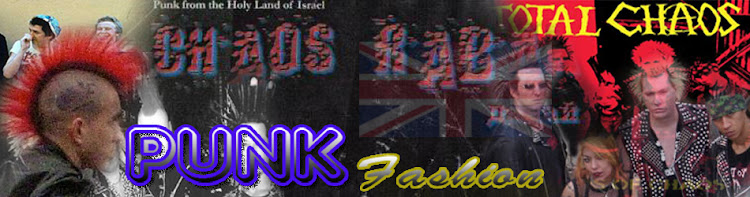
template by suckmylolly.com - header image (c) historypicks.com